
Heart Murmur in Rex Kittens: What You Need to Know
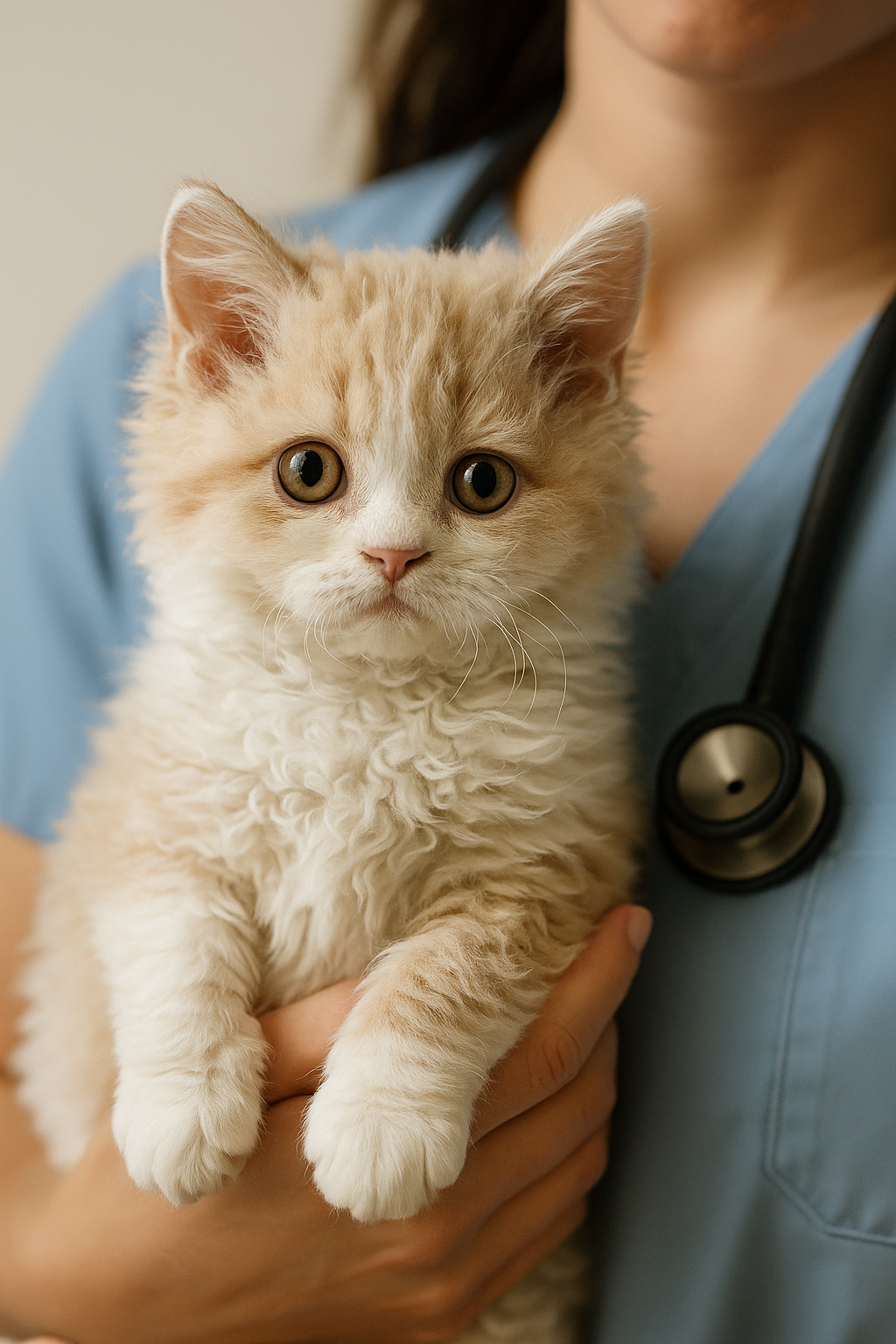
Your kitten have a heart murmur?
After weeks—or even months—of waiting, your little Selkirk Rex or Devon Rex has finally arrived home! Congratulations on this wonderful adoption. But during the first veterinary visit, a worrying piece of news arises: the veterinarian has detected a heart murmur. In just a few minutes, you may experience a range of emotions—fear, anger, concern. Rest assured!
First, listen to your veterinarian’s recommendations.
In the vast majority of cases, the murmur is benign and classified as grade 1 or 2. The veterinarian can usually determine on the spot which type of murmur is present. Two categories are distinguished:
🩺 Physiological murmur: harmless and not linked to heart disease.
🩺 Pathological murmur: associated with a cardiac abnormality.
Physiological murmurs pose no danger and often disappear before one year of age, sometimes as early as six months. They are common in kittens, including Selkirk Rex, and do not affect behavior: the kitten eats, plays, sleeps, and breathes normally, without shortness of breath.
The veterinarian will monitor the murmur during routine checkups and vaccination visits. If, over time, the murmur increases instead of decreasing, you may be referred to a veterinary cardiologist. This specialist can confirm the nature of the murmur through diagnostic tests, usually performed after one year of age. Rest assured, all of our breeding cats have tested normal for HCM, and written proof of the parents’ HCM results is included in your kitten’s starter kit or health record.
Key points to remember:
🐾 A physiological murmur does not prevent a kitten from living a long and healthy life.
🐾 Stress related to transport, veterinary visits, or a new environment can temporarily accentuate sounds heard during auscultation.
🐾 Continue to observe your kitten and follow the monitoring plan recommended by your veterinarian.