
Welcoming Your Kitten Home
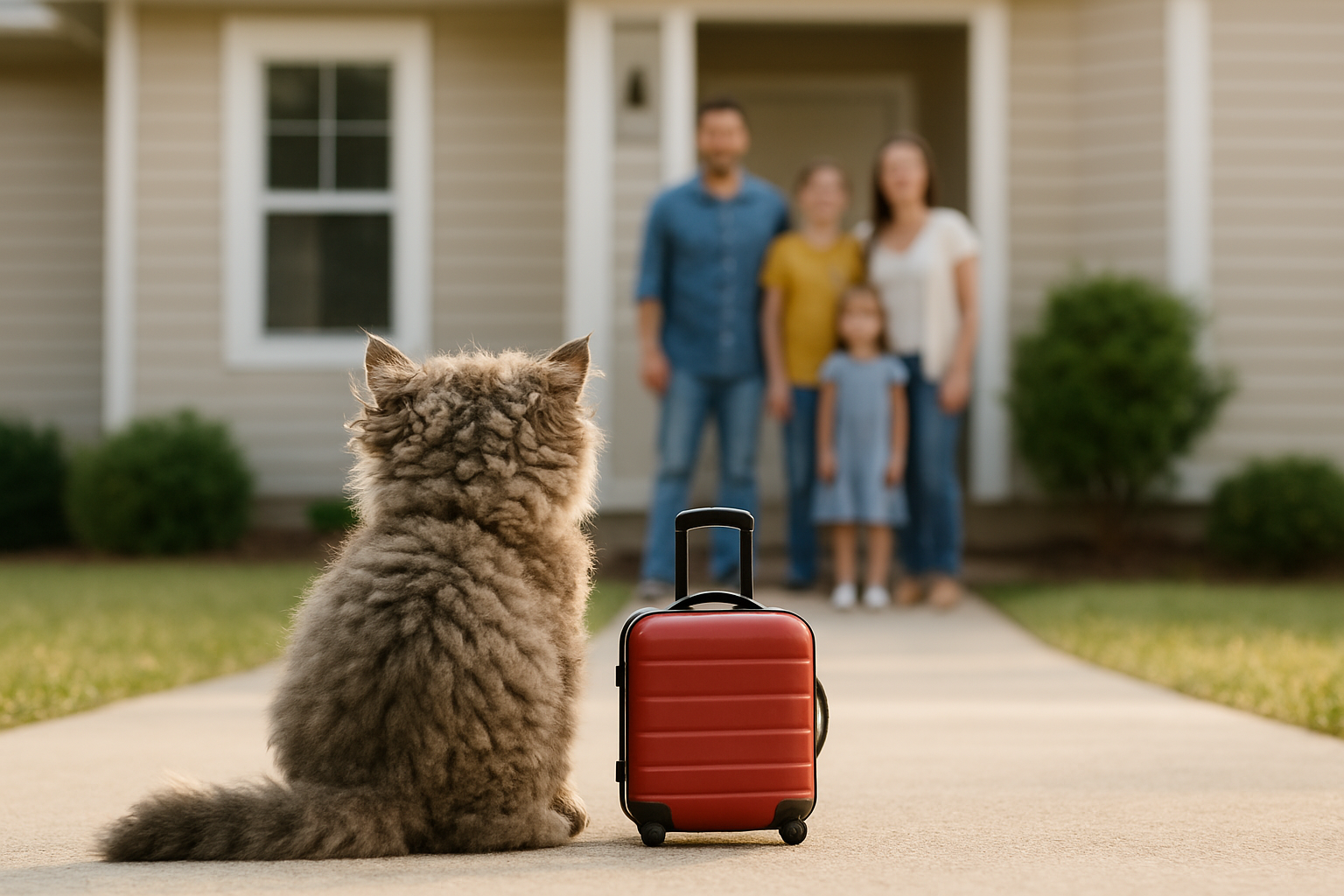
A Huge Upheaval for a Tiny Being
Arriving in a new family is one of the most stressful moments in a kitten's life. Overnight, he leaves behind everything he has known since birth: his surroundings, his scents, his landmarks, and the reassuring presence of his mother and littermates. Even if your family is gentle, loving and full of good intentions, your kitten is going through a genuine emotional wrench.
Understanding this is already the greatest gift you can offer him. In the first days, our role is not to entertain him or show him off to everyone — it is to make him feel safe, gently, at his own pace.
The First Days: a Small Room, a Great Comfort
We recommend settling your kitten into a small, quiet, low-traffic room — a bathroom, a small office, a guest room — for a period of about five days.
For reasons of health and safety, this gentle "quarantine" protects your kitten in a controlled space while he recovers from the trip and settles in.
On an emotional level, it lets him decompress after the journey and get to know his new world quietly. Through the door, he hears the voices, the sounds and the rhythm of his new family, and grows used to them without feeling threatened. Little by little, he also discovers the new scents of the home.
The separation from his mother eases day by day. But his deepest need — to feel safe and to belong to a family — remains innate. It is precisely during this period that the bond with you begins to form.
Every Kitten Moves at Its Own Pace
A kitten is a living being in his own right, with his own emotions and sensitivity. Some are more delicate than their littermates, and each adapts differently depending on his temperament and his new environment.
This is why adaptation must happen at the kitten's pace, not ours. Some will take 24 to 48 hours, others 7 to 10 days. There is no right or wrong timeline: there is only your kitten.
Building the Bond: the Art of Short Visits
During these first days, every member of the family can — and should — visit him regularly. These visits need not be long, but they must always be pleasant and reassuring.
Enter the room, sit on the floor, speak to him softly. Play with him, offer a few kibbles from the palm of your hand, pet him, and above all let him come to you at his own pace. This is how trust is born.
Your kitten may meow to call his mother and littermates. No one will answer… except you. It is up to you, then, to come and reassure him, exactly as his mother would have come to see what was happening. Always approach with calm and gentleness, never with anger or too much excitement. What he needs is serenity, tenderness and love.
How to Know He's Ready to Come Out
You'll know your kitten is ready when, as you enter the room, he no longer hides. At first he may take cover; then, gradually, he will come to you with his tail held high, asking for cuddles, meowing to greet you, rubbing against your ankles.
This is the sign that the bond he had with his mother and littermates has transferred to you — to each member of his new family. The moment has finally come to open the door.
Opening the Door, Gently
Let him discover his new environment gradually, at his own pace, and always keep the door of his little room open behind him.
For the following month, this room will remain his comfort zone, his refuge. At the slightest sharp noise or moment of stress, he can run there to reassure himself.
We recommend leaving his carrier there, simply removing the door, with the blanket provided by the cattery inside. This blanket carries the scent of his mother and his familiar surroundings: only wash it if he has a little accident on it — otherwise, leave it as is.
When you open the door, remember to close off all unnecessary rooms: the basement, bedrooms, any space he doesn't need to discover right away. Imagine how tiny he is in this enormous house. Let's go slowly, one step at a time.
Sleeping at Night
At night, we recommend at all times that the kitten sleep in his little room, door closed. The first nights, he may meow: he is still looking for his mother and littermates. This is normal. Gradually, you will notice these meows grow further apart, then gently fade away.
An important note if you are considering turning this integration room into a bedroom — a child's room, for example. Think it through carefully from the start, because it is very difficult to move a cat out of a living space once the integration period is over. If your kitten isn't yet perfectly litter-trained and has little accidents in your child's room, the situation quickly becomes less pleasant. Plan ahead in the very first days: you'll give yourself true peace of mind.
Once your cat is fully litter-trained, throughout the house and at all times, and has shown he can stay several hours in a bedroom with someone without causing any mess or waking the child, you may then decide to let him sleep wherever he pleases.
In our home, all the cats sleep in a room set aside for them — except one, who sleeps at all times with our youngest daughter. That cat is her cat, and hers alone: the bond of affection formed with her, and with no other human in the house. That is why we allow him to sleep with her. Even when all the doors are wide open, this cat comes to sleep right beside her head. We decided it this way, for the wellbeing of both the cat and our child.
That said, since every cat has its own temperament and personality, it is impossible to predict, in the very first days, how it will react over time. This is why sleeping in the arrival room always remains preferable at the beginning.
Other Animals: Patience Above All
Avoid introducing your other animals too soon. When you let the kitten explore, keep the other animals away — the dog outside, downstairs or in another room, the cat at a distance. Introductions will come much later, once the kitten is fully at ease in his environment.
For a dog, we recommend an introduction through a crate or a baby gate, which lets each one see the other without feeling threatened. If you use a gate and your dog is large, you can raise it slightly: the kitten can slip underneath to escape, but the dog cannot pass. Your kitten will thus always have a safe zone to retreat to, away from his canine friend.
One essential point: all of this should only happen once the kitten is confident with each human member of the family. If integration with other animals happens too quickly, before the bond with the humans is established, the kitten will form his attachment… with the animals, not with you. If you dream of an affectionate, cuddly and confident adult cat, trust me: wait a little.
The Start of True Family Life
You can open the remaining doors — bedrooms and other rooms — in the days following his integration, once your kitten has shown he is perfectly litter-trained at all times and has settled into all his landmarks. That is when true family life with your little one can finally begin. 🐾