
Selkirk Rex Colors
A Complete Visual Guide —
All recognized coat colors and patterns
The Selkirk Rex is renowned for its uniquely curly coat, but did you know this breed comes in an incredible variety of colors and patterns? From solid hues to the most intricate markings, discover here every recognized coat type in the Selkirk Rex.
1. Solid Colors
Solid coats display a single uniform color from root to tip, with no stripes or markings. The Selkirk Rex can be found in eight distinct solid colors: black, white, blue (grey), red (ginger), cream, chocolate, lilac, and cinnamon. Each shade beautifully highlights the breed's signature curly texture.
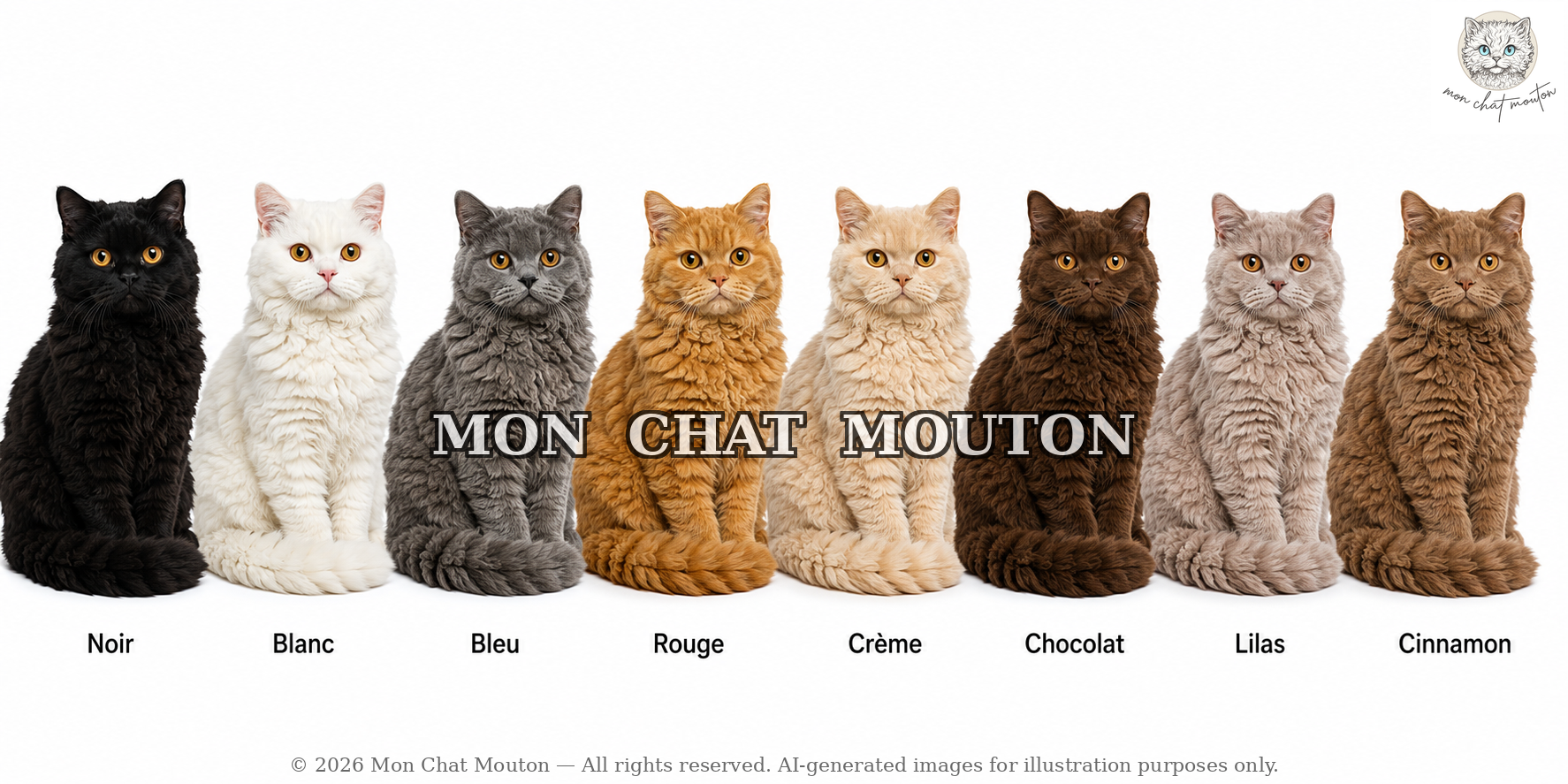
Solid Colors
2. Brown & Blue Tabby Patterns
The tabby pattern comes in three main variations: classic (broad swirling marbled markings), mackerel (narrow parallel stripes), and spotted (distinct spots). In brown, the markings appear dark against a warm golden background. In blue, the pattern shows in soft grey tones on a paler, more delicate base.
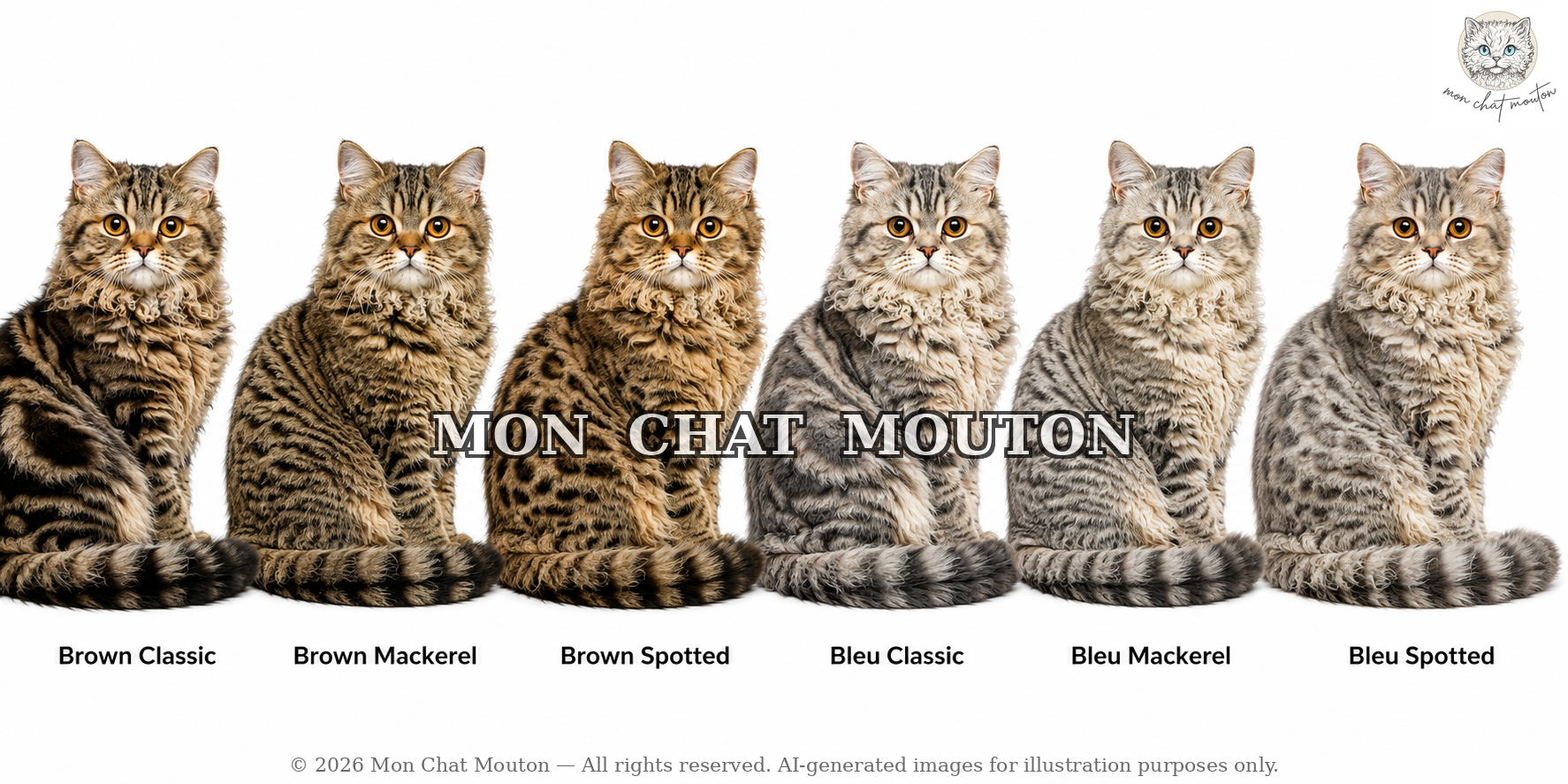
Brown & Blue Tabby Patterns
3. Silver, Red & Cream Tabby Patterns
Silver tabbies offer a striking contrast with their dark markings against a shimmering silver base. Red tabbies display bold orange stripes on a lighter ground, while the cream tabby reveals a soft, gentle pattern in sandy ivory tones.
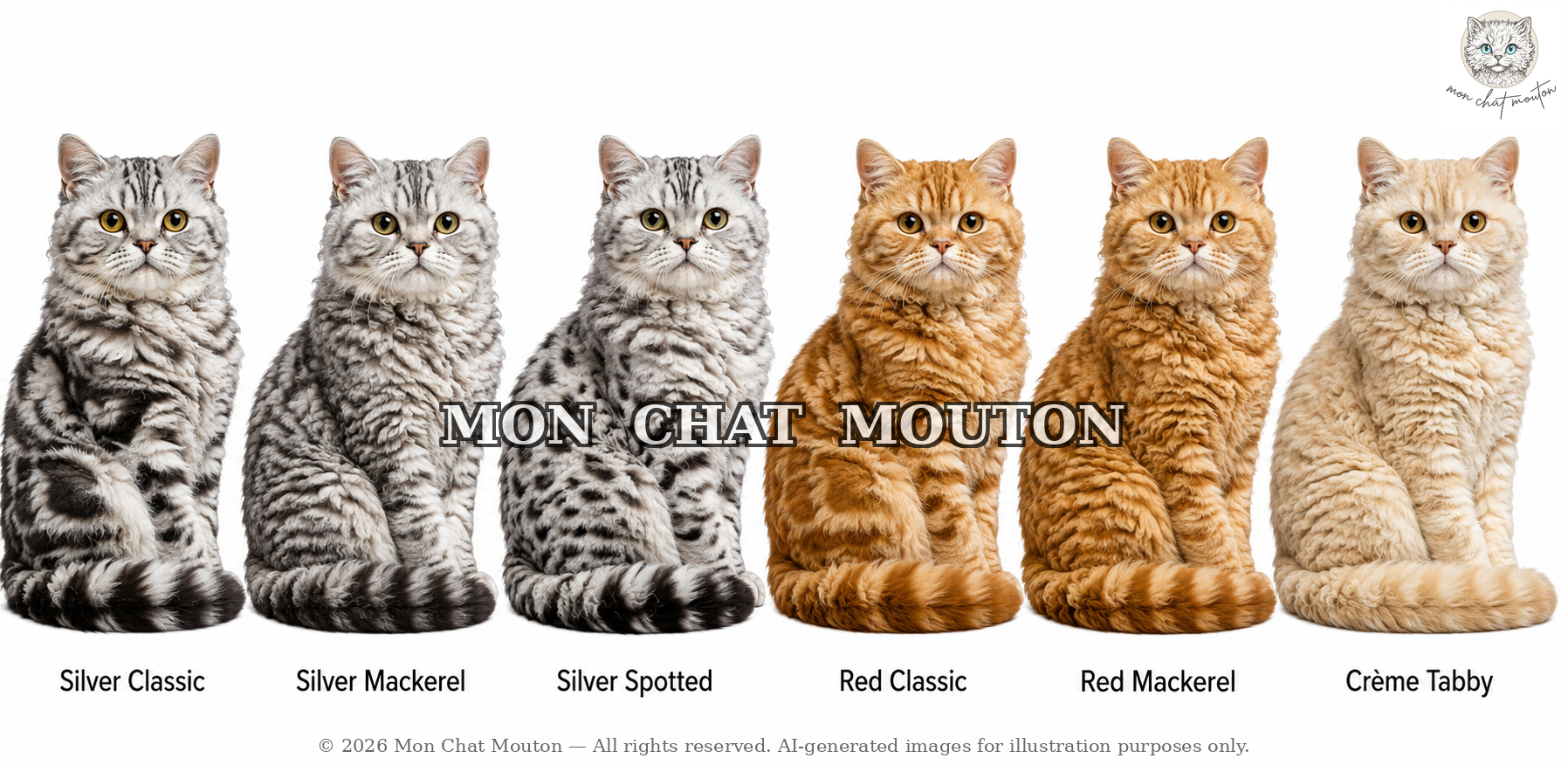
Silver, Red & Cream Tabby Patterns
4. Chocolate, Lilac, Cinnamon, Fawn Tabby & Torbie
These rarer tabby colors are highly sought after. Chocolate and cinnamon deliver warm, rich tones, while lilac and fawn are remarkably delicate. The torbie (tortie + tabby) combines the tabby pattern with tortoiseshell coloring, creating a truly unique blend.
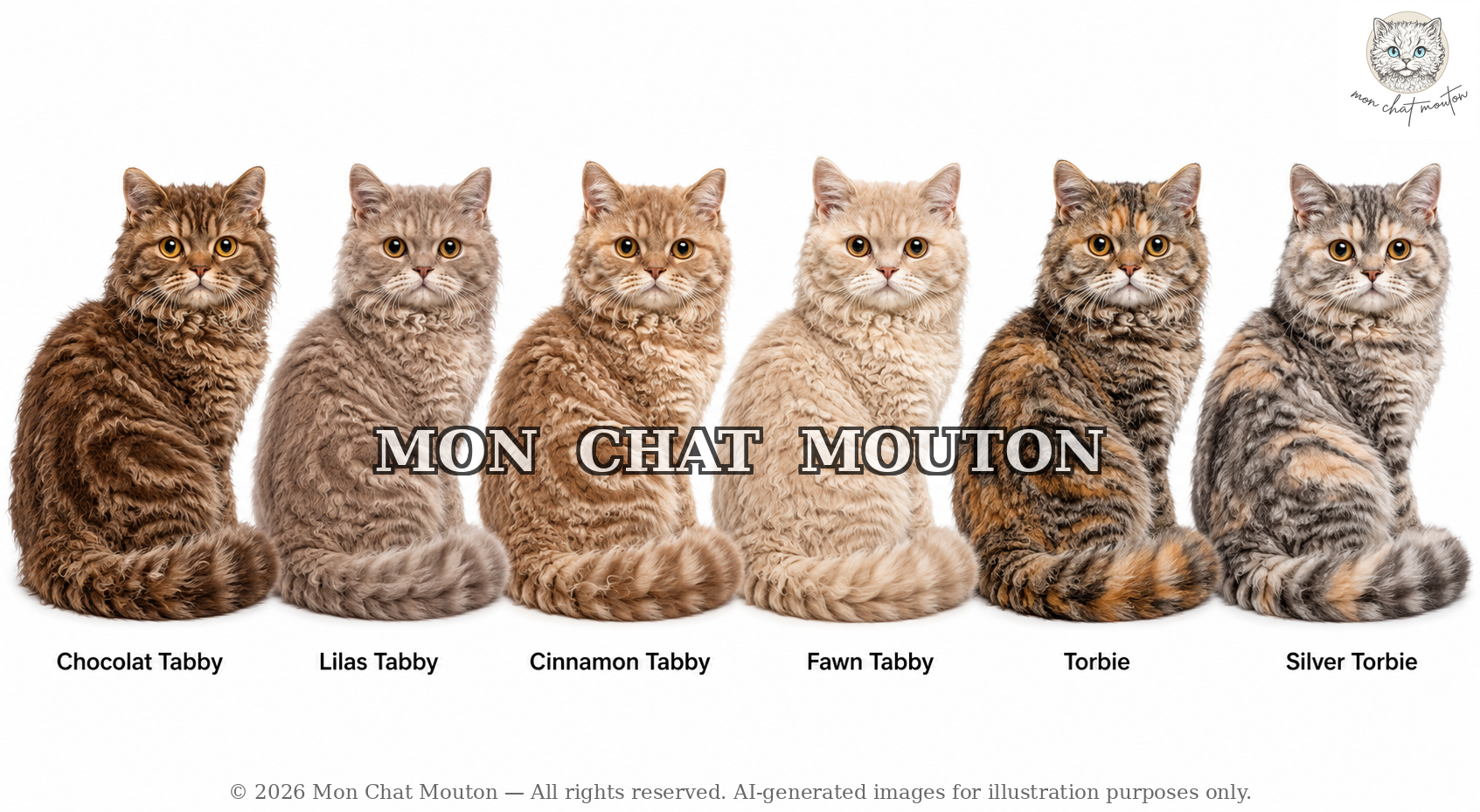
Chocolate, Lilac, Cinnamon, Fawn Tabby & Torbie
5. Chinchilla & Shaded
Chinchilla and shaded coats are among the most elegant. Only the very tip of each hair is colored, producing a sparkling, luminous effect. The chinchilla has very light tipping, while the shaded is slightly more pronounced. These cats are also distinguished by their stunning green eyes.
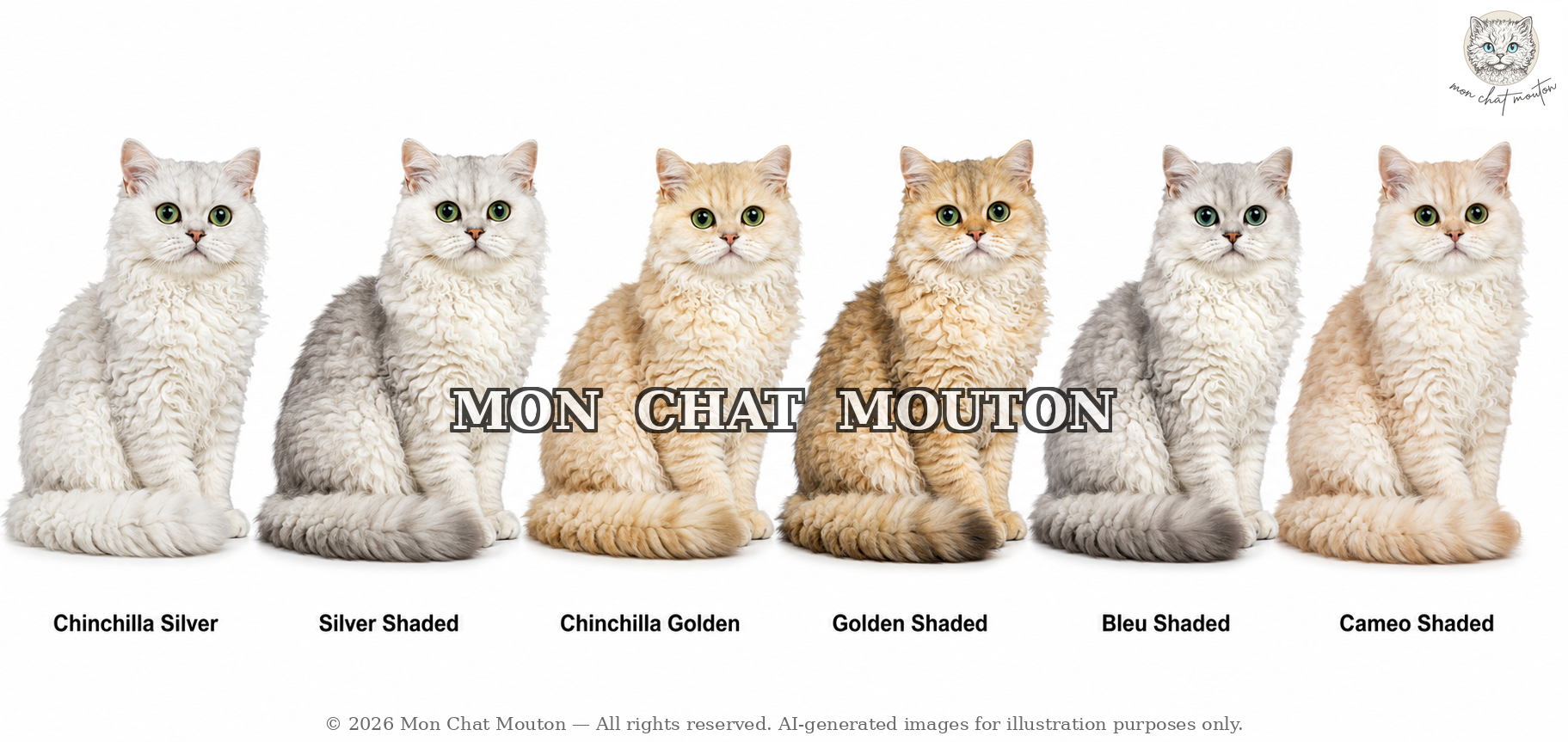
Chinchilla & Shaded
6. Smoke Colors
The smoke effect is spectacular — the base of each hair is white while the outer portion is colored. At rest, the cat appears solid, but as soon as it moves, the white undercoat peeks through, creating a mesmerizing smoky illusion. This contrast is particularly striking on the Selkirk Rex's curly coat.
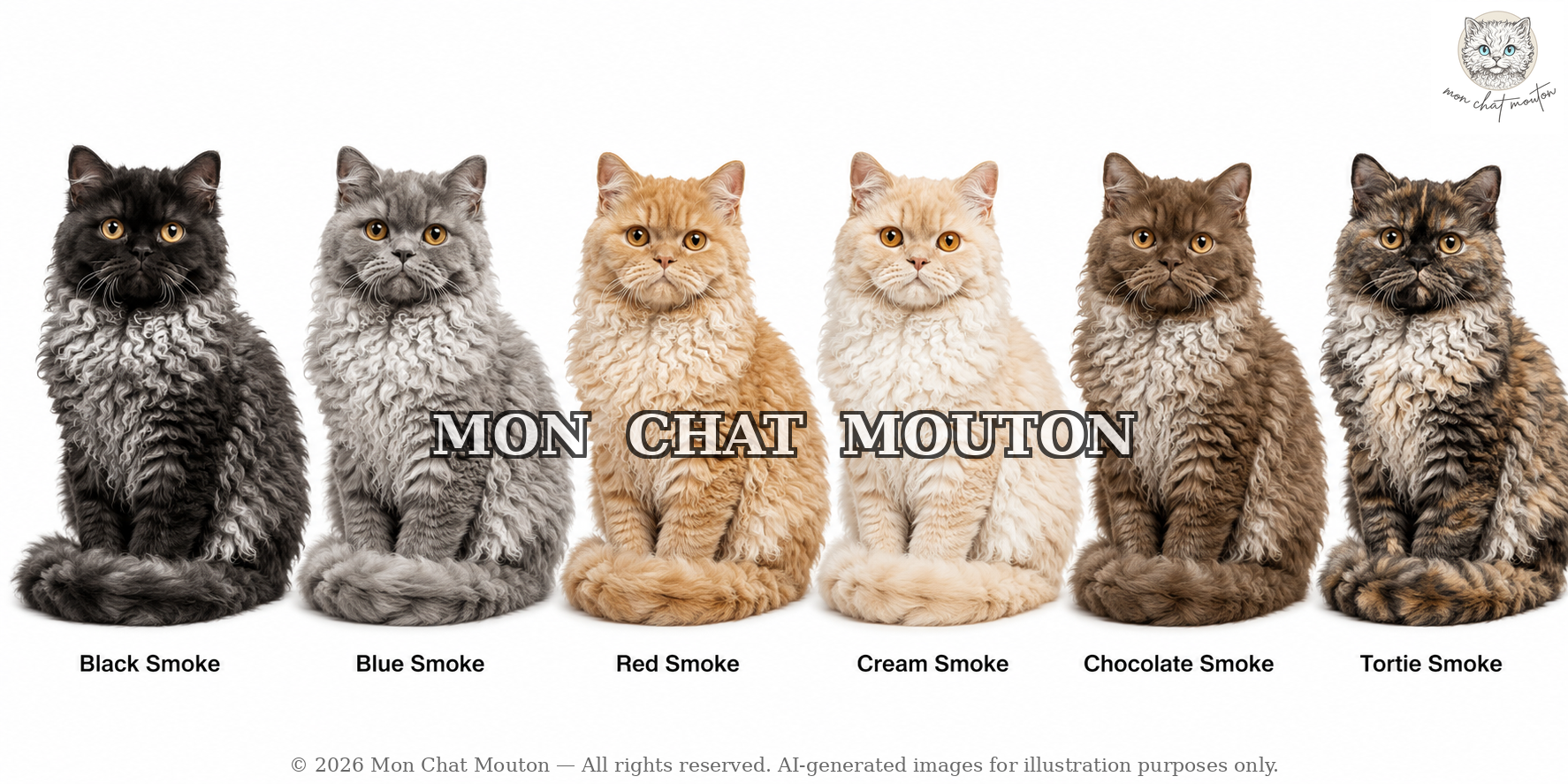
Smoke Colors
7. Tortoiseshell Colors
Tortoiseshell coats blend two colors in a random patchwork that is unique to each cat. Almost exclusively female, these Selkirk Rex display combinations ranging from classic black and red to the delicate lilac and cream. Every tortie is a one-of-a-kind work of art.
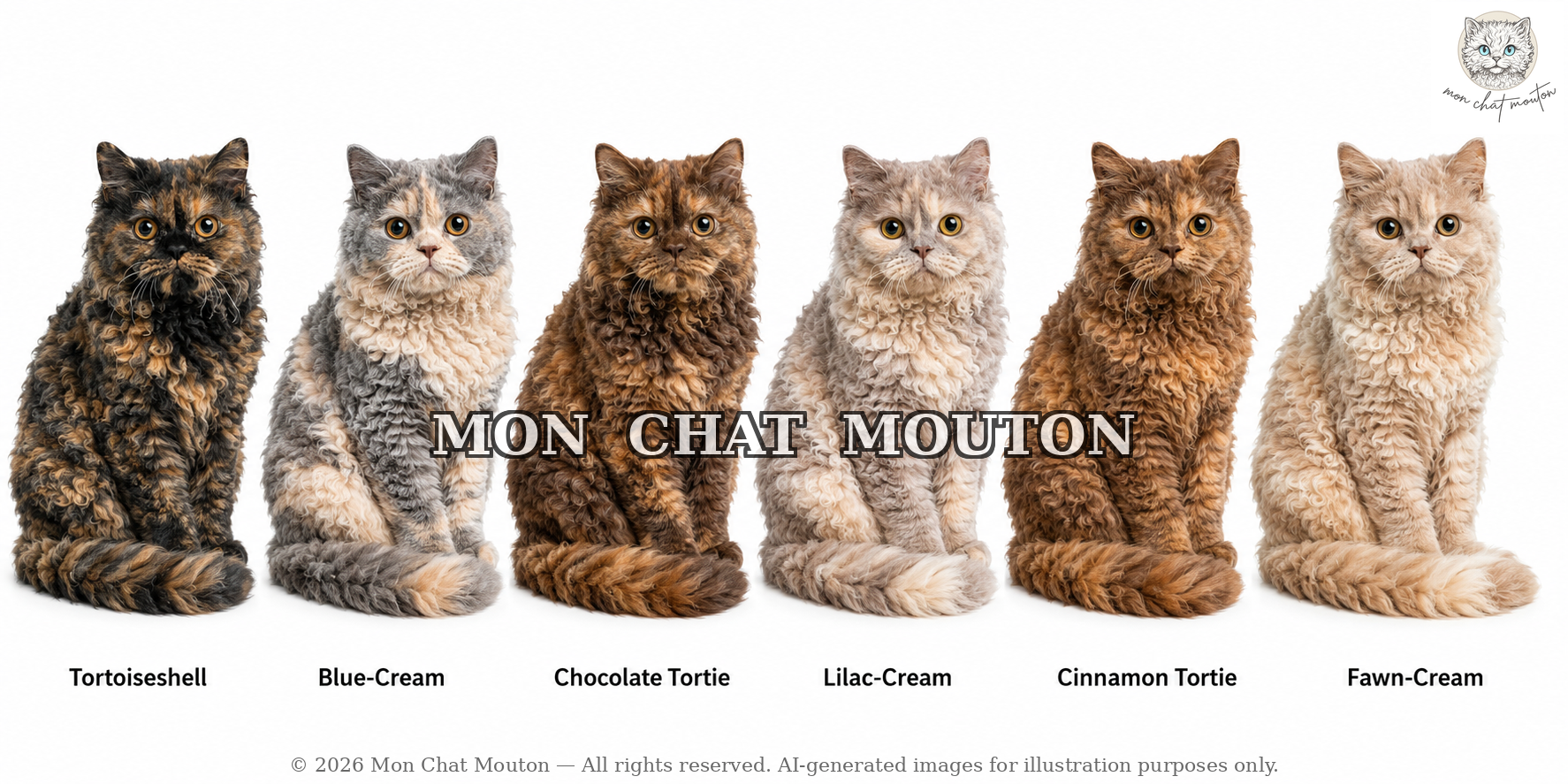
Tortoiseshell Colors
8. Calico Colors
Calico adds white to the tortie palette, creating vivid, high-contrast tricolor coats. The classic calico combines black, red, and white, while the dilute calico offers softer tones of blue, cream, and white. Calico tabby varieties add stripes to the colored areas for an even richer look.
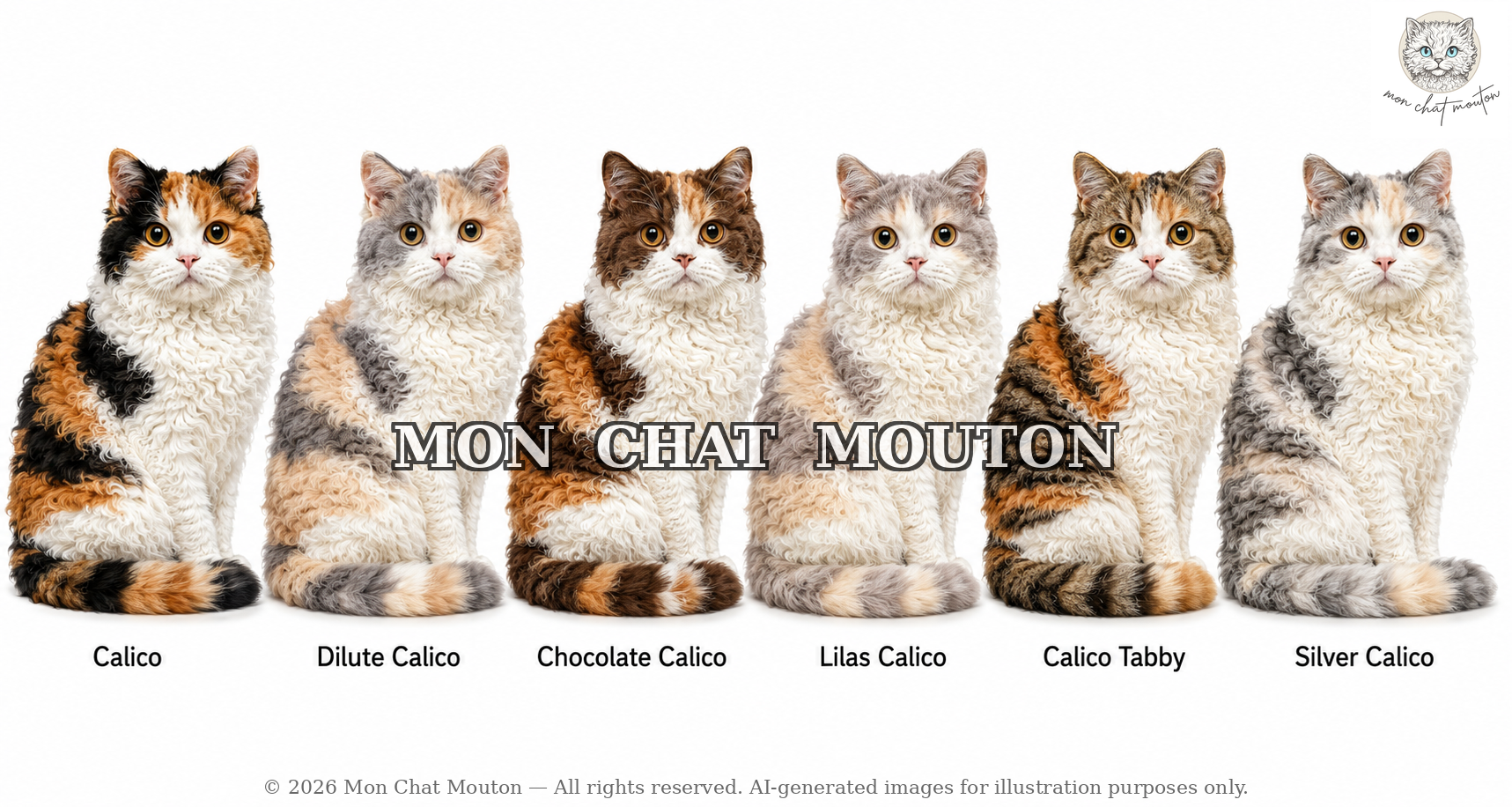
Calico Colors
9. Bicolor Patterns
Bicolors combine a single color with white, typically distributed across the belly, paws, and face. The proportion and placement of white varies, making each cat unique. Bicolor tabbies add stripes to the colored areas for an even more distinctive appearance.
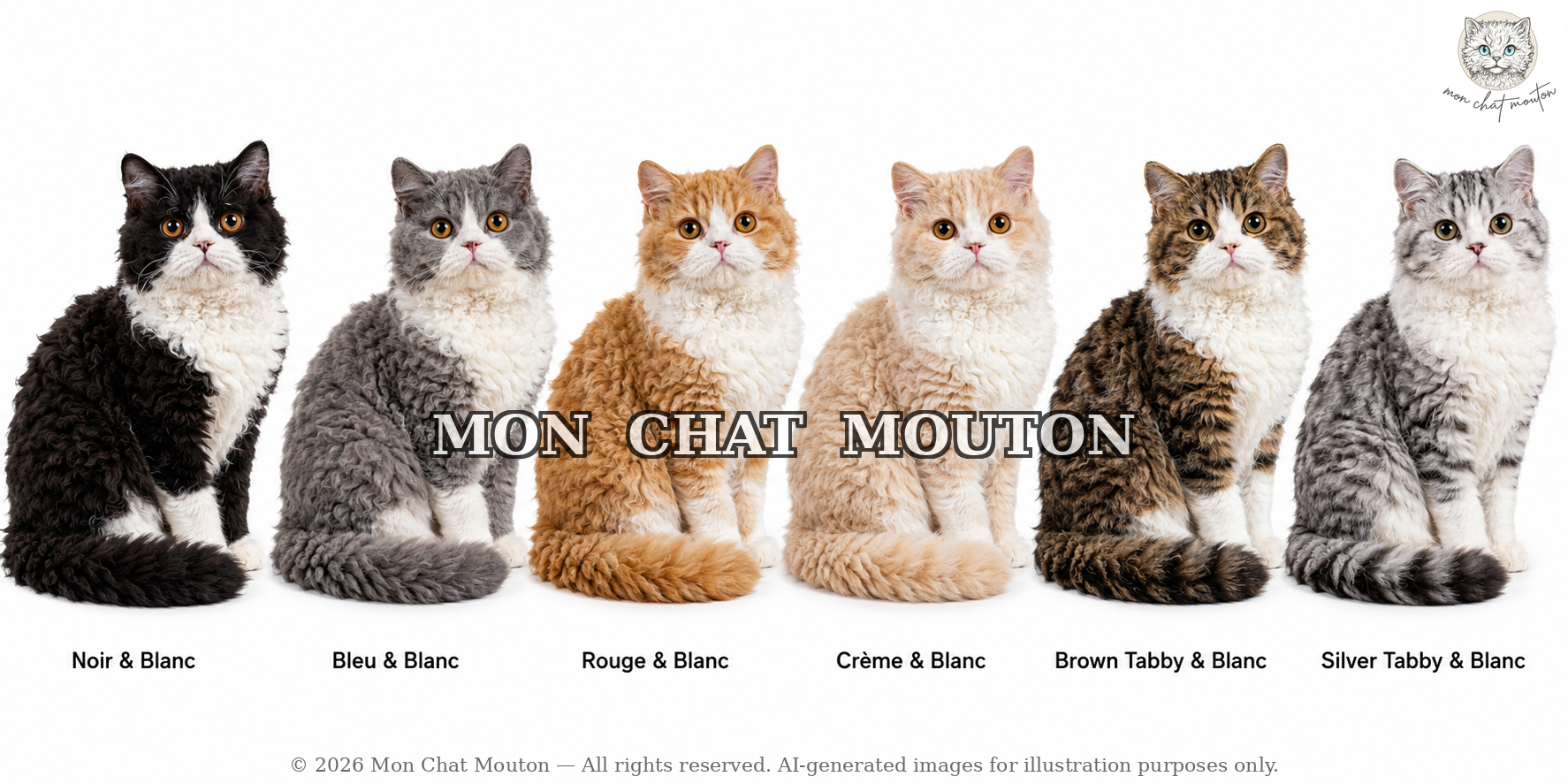
Bicolor Patterns
10. Van & Harlequin Patterns
The van pattern features a nearly all-white cat with color restricted to the head and tail. The harlequin is similar but with a few additional color patches on the body. These patterns give the Selkirk Rex a particularly elegant and refined appearance.
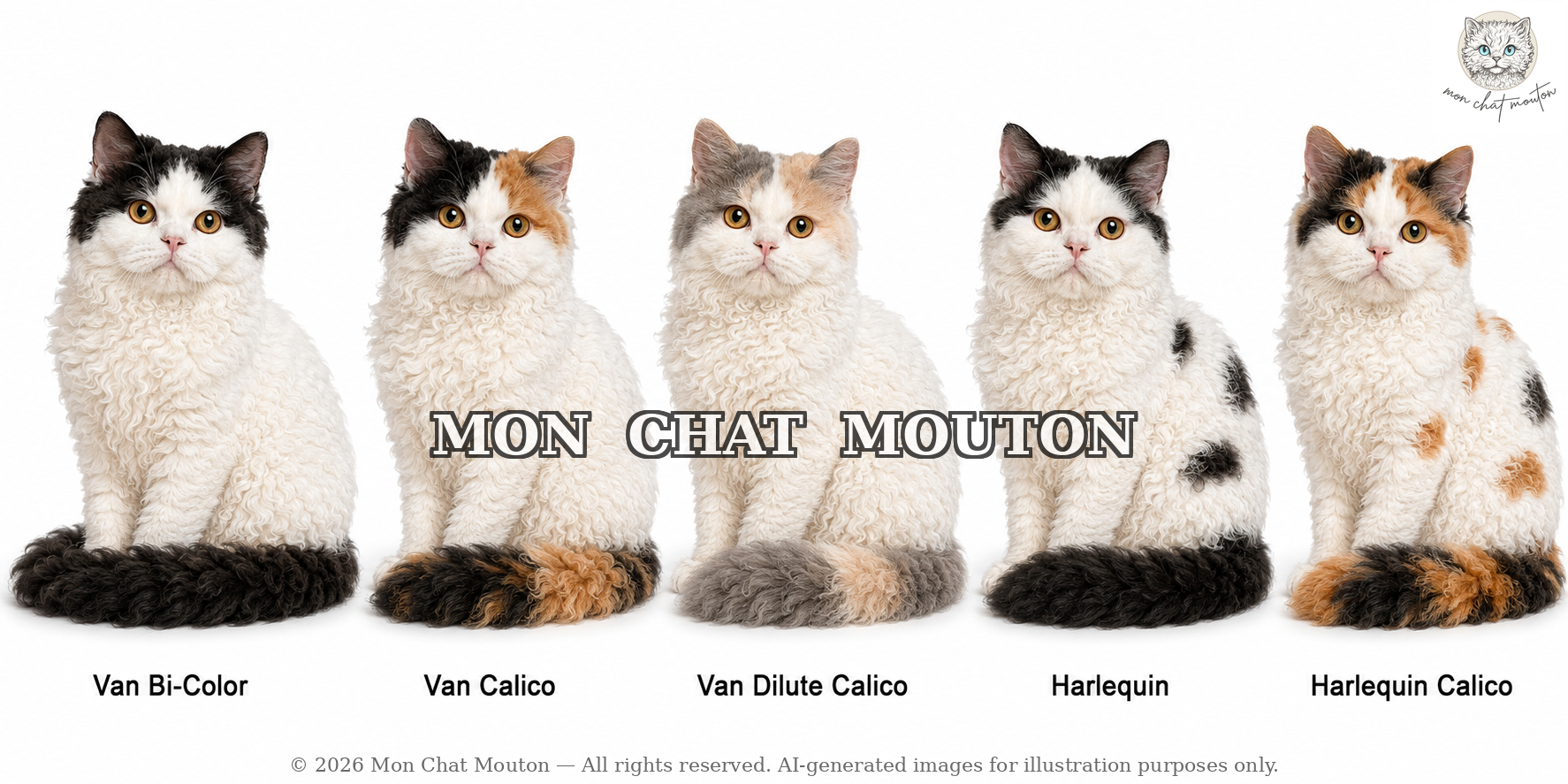
Van & Harlequin Patterns
11. Colorpoint Patterns
Colorpoints display a light body with color concentrated at the extremities: face, ears, paws, and tail. This pattern, inherited from the Siamese and Persian lines, comes with beautiful blue eyes. From deep seal to delicate fawn, each variation has its own unique charm.
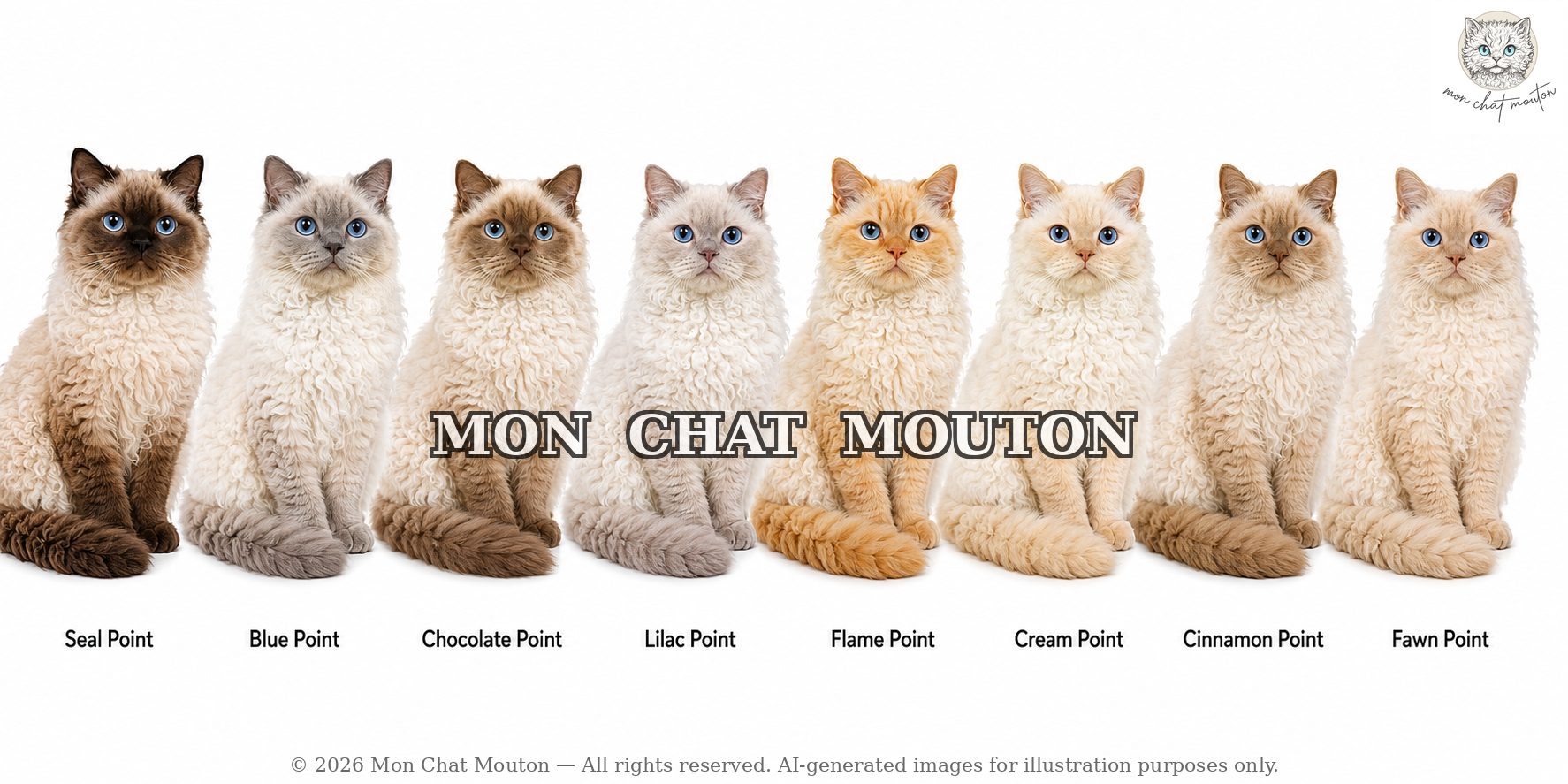
Colorpoint Patterns
12. Tortie Point & Lynx Point
Tortie points combine the colorpoint pattern with tortoiseshell coloring at the extremities, found exclusively in females. Lynx points add tabby striping to the points, creating a delicate striped effect on the mask and paws. All retain the characteristic blue eyes of colorpoint cats.
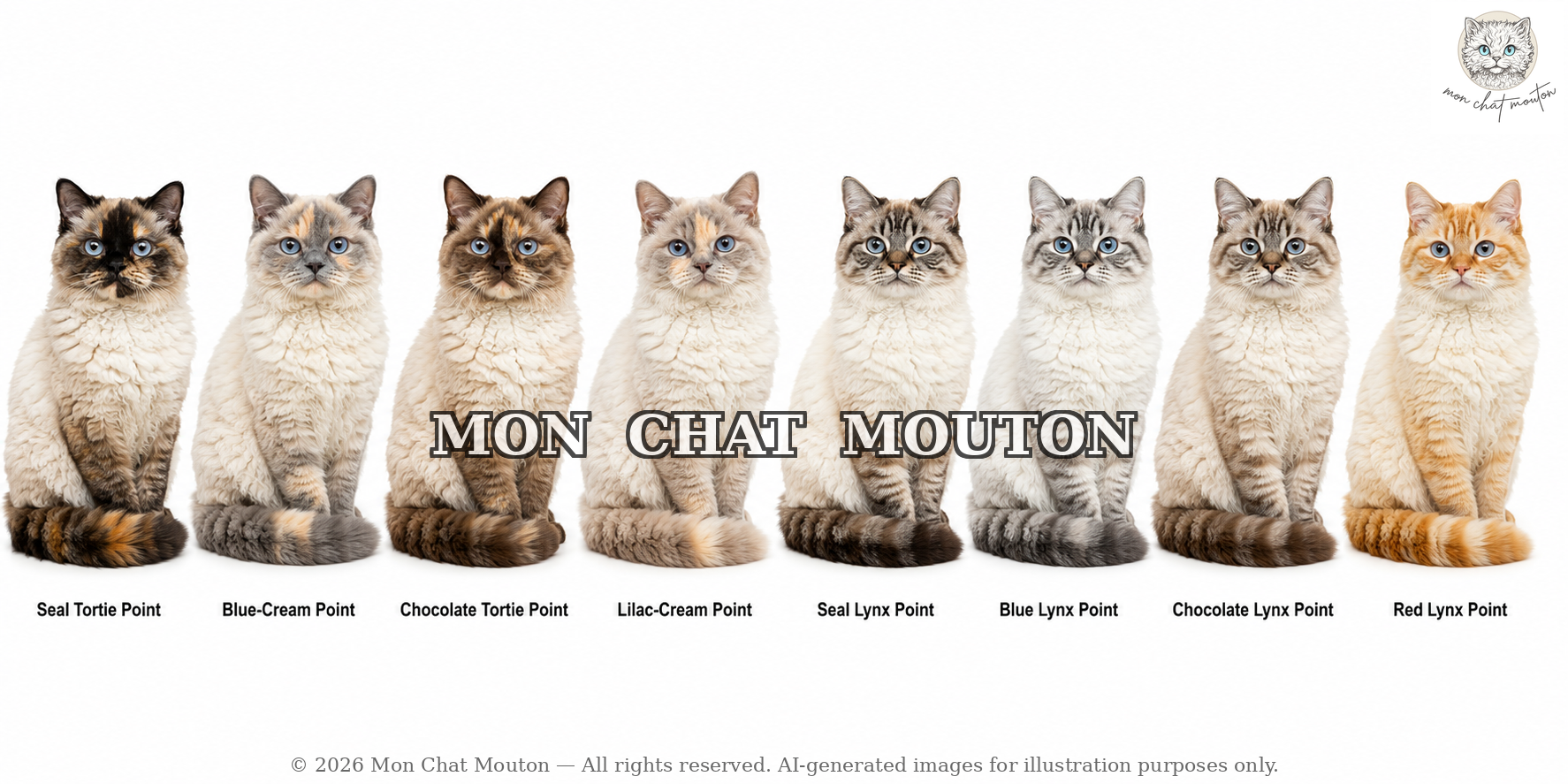
Tortie Point & Lynx Point
13. Mink & Sepia Patterns
Mink and sepia are variations of the colorpoint pattern with less contrast between the body and extremities. The mink features distinctive aqua eyes and moderate contrast, while the sepia presents an even subtler difference with gold or green eyes. These rare coats are highly prized by connoisseurs.
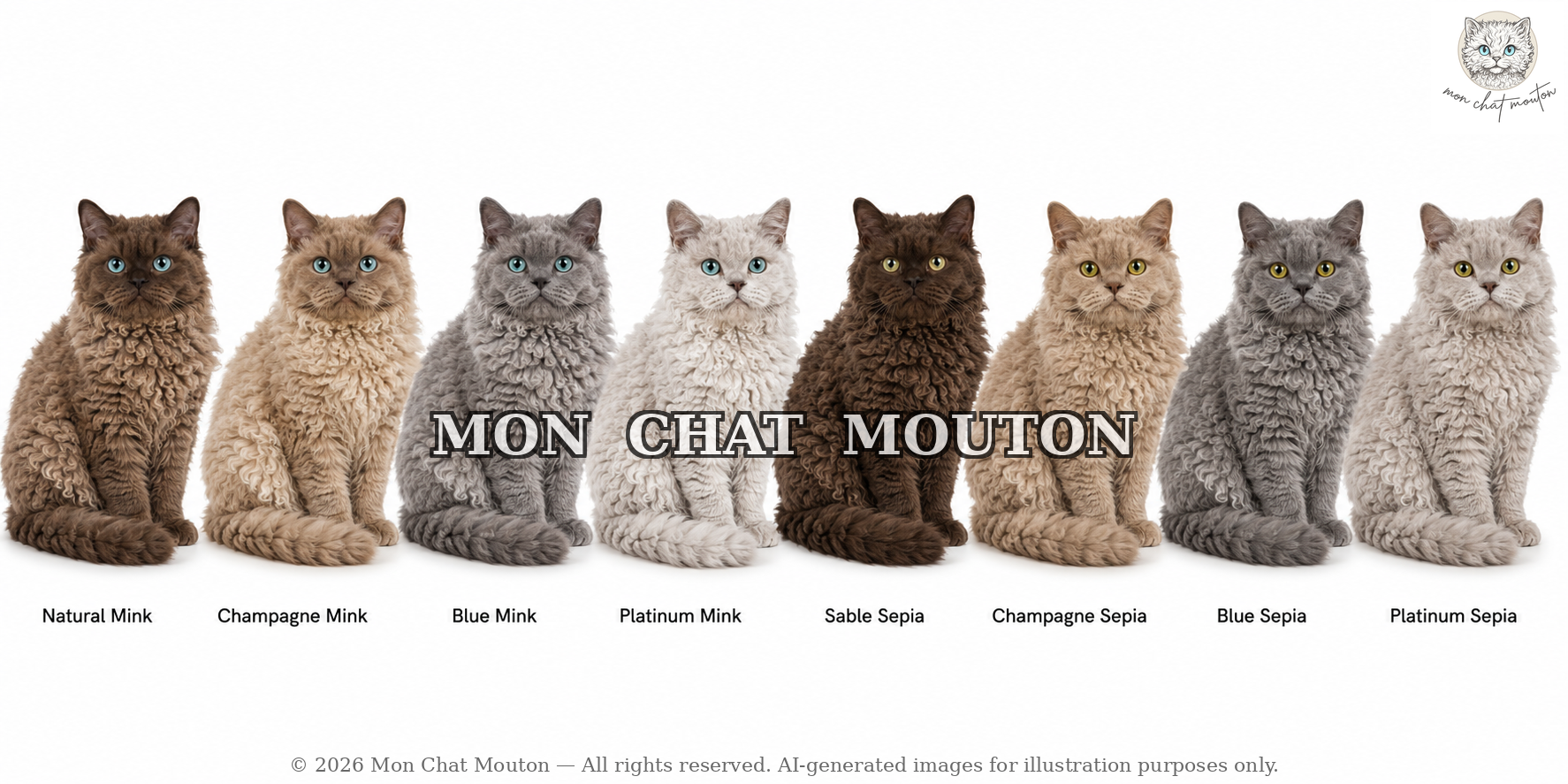
Mink & Sepia Patterns