
🧬 The DBE Gene in Cats
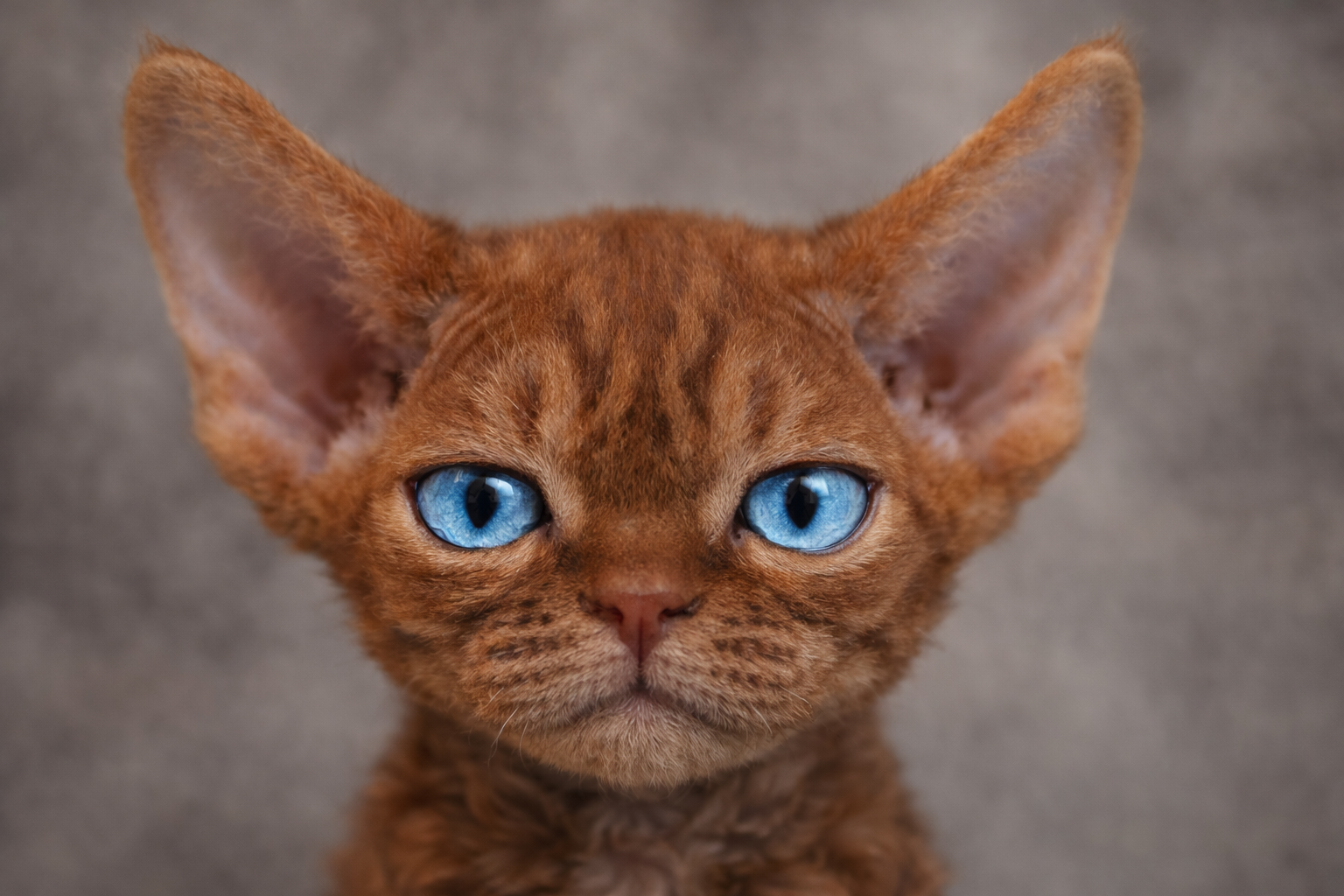
Understanding Dominant Blue Eyes
Blue eyes in cats have long been associated with specific coat patterns, such as the Siamese colorpoint or white cats. Recent genetic research has identified another mechanism: DBE, which stands for Dominant Blue Eyes.
What is DBE?
DBE (Dominant Blue Eyes) is a genetic trait that causes blue eyes in cats that:
are not colorpoint,
are not white,
and may have no white markings at all.
Only one parent needs to carry the DBE variant for the trait to appear in some kittens, which is why it is described as dominant.
🧬 How does DBE work? (Plain explanation)
Kittens inherit genes from both parents
With DBE, a single copy of the variant is sufficient for blue eyes to appear
A DBE cat may pass the trait to approximately 50% of its offspring, depending on the pairing
It is important to note that DBE is genetically distinct from:
the Siamese (colorpoint) gene,
the dominant white gene,
and the white spotting gene.
🔍 Why do DBE cats have blue eyes?
Scientific studies indicate that certain DBE variants are linked to the PAX3 gene.
PAX3 plays a role early in embryonic development, particularly in:
the migration of pigment-producing cells (melanocytes),
the development of sensory structures.
When fewer pigment cells reach the iris, the eyes appear blue — even in cats with darker coats.
🐱 Is DBE linked to health concerns?
In most cases, DBE is not associated with health problems.
However, research shows that some specific DBE variants (not all) may be associated with an increased risk of partial or complete deafness, particularly in certain bloodlines.
This does not mean that all DBE cats are deaf. It simply means the trait must be:
carefully monitored,
responsibly bred,
and supported by genetic and hearing tests when appropriate.
🧪 Can DBE be genetically tested?
Yes.
Recent advances allow laboratories to offer targeted DNA tests for certain DBE variants, especially those requiring additional caution in breeding programs.
These tests help breeders:
understand a cat’s genetic profile,
avoid risky combinations,
prioritize long-term health and welfare.
🐾 Why is DBE considered rare?
DBE remains uncommon because:
it was identified only recently,
it exists in a limited number of bloodlines worldwide,
and it requires informed, ethical breeding practices.
For these reasons, DBE is considered a rare and complex genetic trait.
🧡 Key Takeaways
DBE = Dominant Blue Eyes
Blue eyes can appear without white or colorpoint genetics
The trait follows a dominant inheritance pattern
DBE is genetically distinct from other blue-eye mechanisms
Some variants require health monitoring
Responsible breeding is essential
📌 Final note
DBE is not merely a visual feature.
It is a genetically documented trait that deserves careful understanding and responsible management. When handled correctly, it allows breeders to balance aesthetic uniqueness with health and genetic integrity.