
The Devon rex breed
The Devon Rex: the Elf-Like Cat with a Big Heart
The Devon Rex is a truly distinctive cat breed, known for its oversized ears, short curly coat, and irresistibly playful personality. Intelligent, affectionate, and people-oriented, this breed has earned a special place in the hearts of cat lovers around the world. In this article, discover the Devon Rex’s origins, physical traits, temperament, care needs, and what to know before welcoming one into your home.
🐾 Origins and History
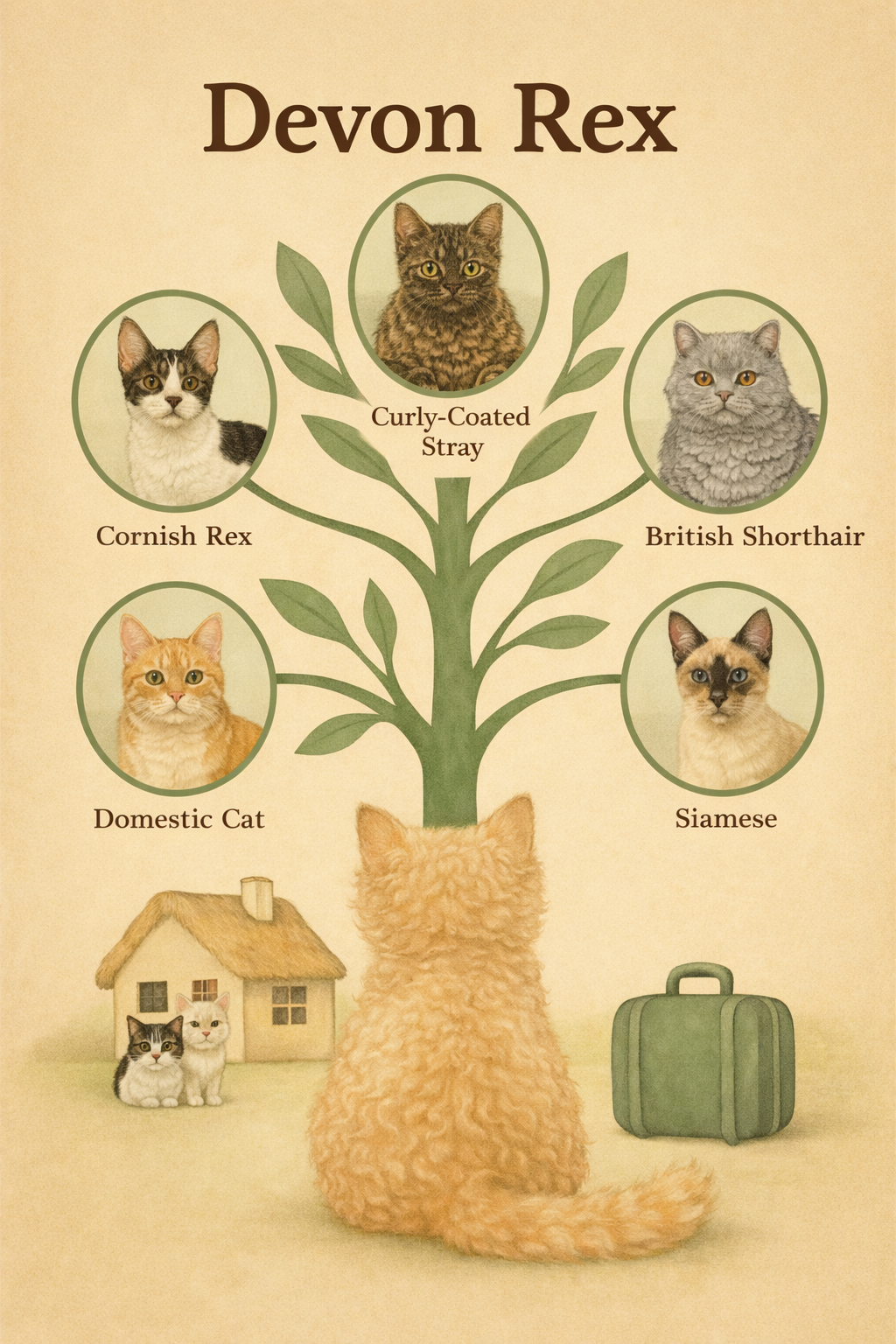
The Devon Rex originated in Devon, England, in the early 1960s. The breed began with a naturally occurring genetic mutation discovered by Beryl Cox, who found a curly-coated kitten named Kirlee. Kirlee became the foundation cat of the breed.
At first, breeders believed the Devon Rex might be related to the Cornish Rex (another curly-coated breed), but genetic testing revealed that the mutations were different and not interchangeable. As a result, the Devon Rex was developed as a distinct breed and officially recognized by major cat associations in the late 1960s and 1970s.
🧬 Physical Appearance: A One-of-a-Kind Look
The Devon Rex is instantly recognizable:
Size: Small to medium, with a light yet muscular body
Coat: Short, fine, soft, and curly or wavy, often described as “velvety”
Head & Ears: Wedge-shaped head, very large ears set low and wide, giving an elf- or pixie-like appearance
Eyes: Large, oval, and expressive
Body: Long legs, slim torso, and a long, tapering tail
Every color and pattern is accepted in the breed, making each Devon Rex visually unique.
😺 Temperament: A Social, Playful Companion
The Devon Rex is famous for its exceptionally people-oriented personality. Often described as “dog-like,” this breed thrives on interaction and dislikes being left alone for long periods.
Common personality traits include:
Highly affectionate: Loves cuddling, lap time, and sleeping close to its humans
Playful and energetic: Enjoys climbing, jumping, and interactive toys
Very intelligent: Learns routines quickly and can even be taught tricks
Social and curious: Wants to be involved in everything you do, from cooking to working at a desk
Because of this strong bond with humans, the Devon Rex does best in homes where it receives daily attention and stimulation.
❤️ Health and Grooming
The Devon Rex is generally a healthy breed, with an average lifespan of 9 to 15 years or more when properly cared for.
Potential health considerations may include:
Patellar luxation (knee issues)
Hereditary myopathy (a rare muscle condition specific to the breed)
Responsible breeders screen their breeding cats to minimize these risks.
Grooming needs are minimal, but special care is required:
The coat is fragile and should not be brushed aggressively
Gentle wiping with a soft cloth is usually sufficient
Ears may need more frequent cleaning due to their size and oil production
🍽️ Diet and Lifestyle
With its high energy level and fast metabolism, the Devon Rex often has a healthy appetite. A high-quality, protein-rich diet is recommended to support muscle tone and overall health.
Despite being active, portion control remains important, especially as the cat ages and activity levels decrease.
🏡 Is the Devon Rex Right for You?
The Devon Rex adapts well to many types of households:
Families with respectful children
Homes with other cats or even cat-friendly dogs
Individuals seeking a deeply bonded, interactive companion
This breed is ideal for people who want a cat that behaves more like a constant companion than an independent observer.