THE DBE GENE
DOMINANT BLUE EYE
Selkirk Rex & Devon Rex
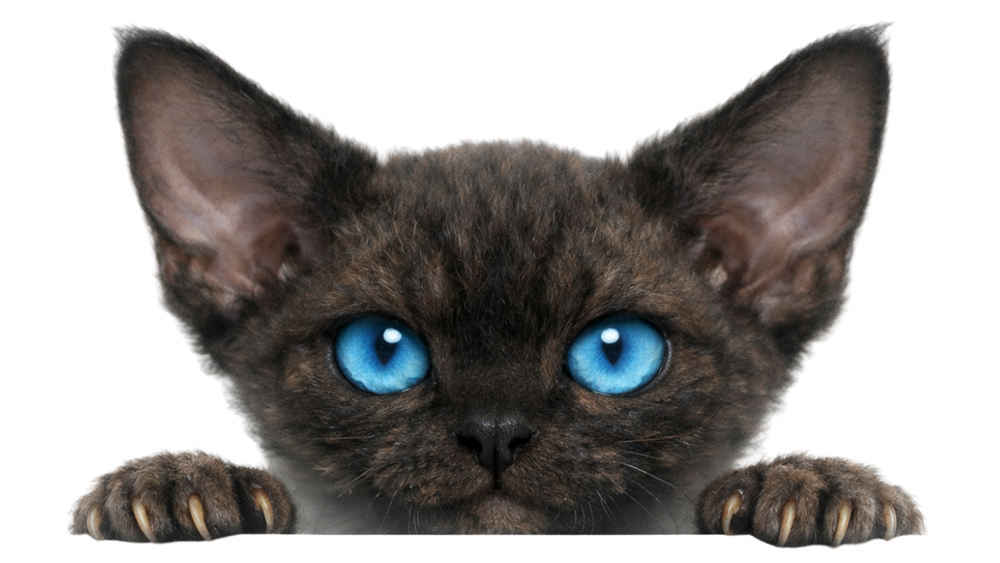
The DBE (Dominant Blue Eyes) is a rare genetic trait that allows blue or partially blue eyes to appear in cats that are neither colourpoint nor predominantly white. A brown, black, tabby or smoke cat can therefore naturally display blue eyes.
Scientific knowledge about the DBE has evolved considerably in recent years. We now know that the DBE does not correspond to a single mutation. Several distinct genetic variants have been identified, notably in the PAX3 gene, while certain historical DBE lines have not yet been genetically characterized.
This distinction matters, because not all DBE lines necessarily share the same health profile.
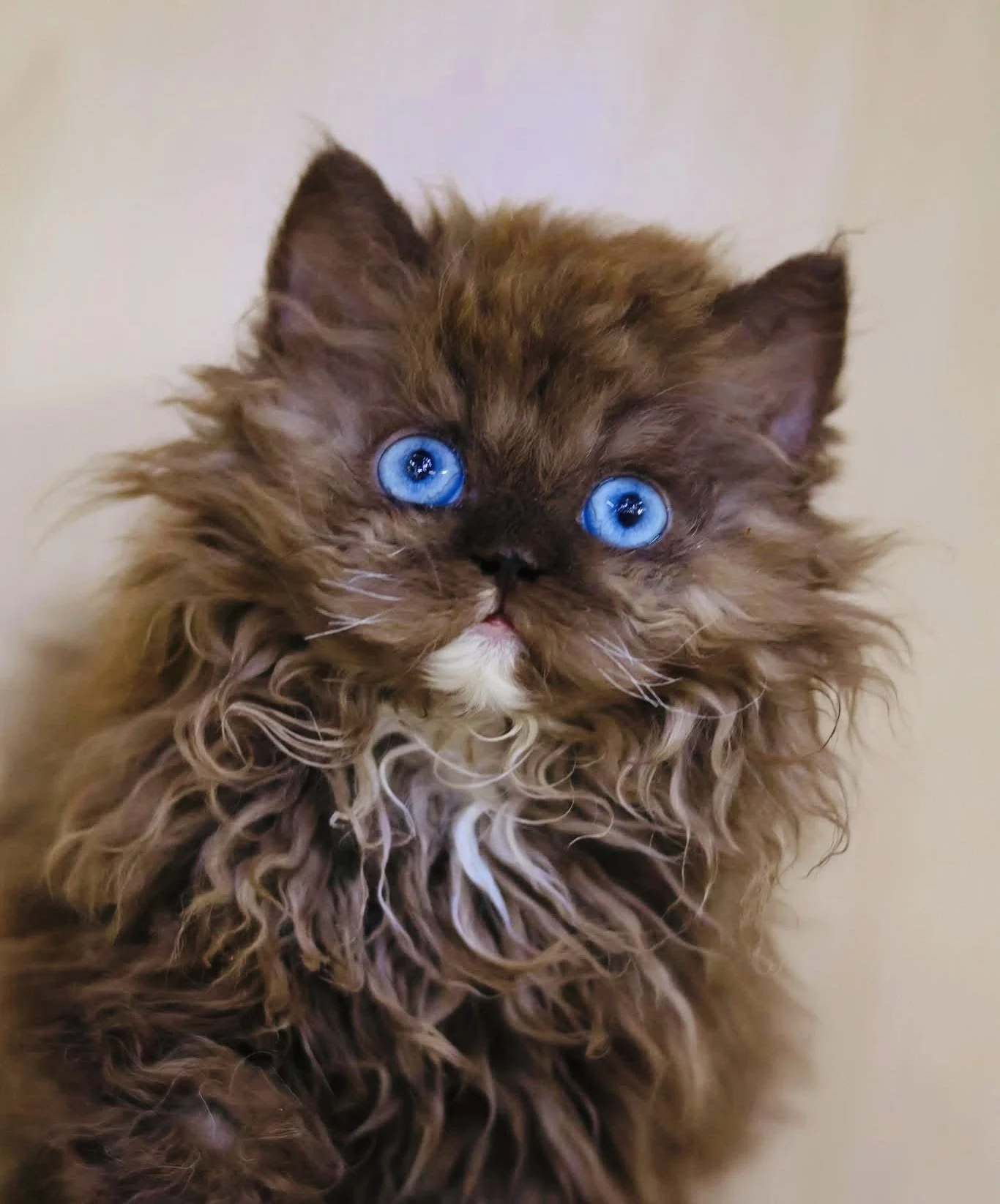
Rakia
SELKIRK REX · DBE
Carrier of the Dominant Blue Eye trait, Rakia embodies the rare union of a rich brown coat and remarkable blue eyes — an exceptional genetic trait in the Selkirk Rex. We are the only cattery in Canada breeding the Selkirk Rex DBE. (As of 2025)
Rakia has normal bilateral hearing on the BAER test, OFA certified.
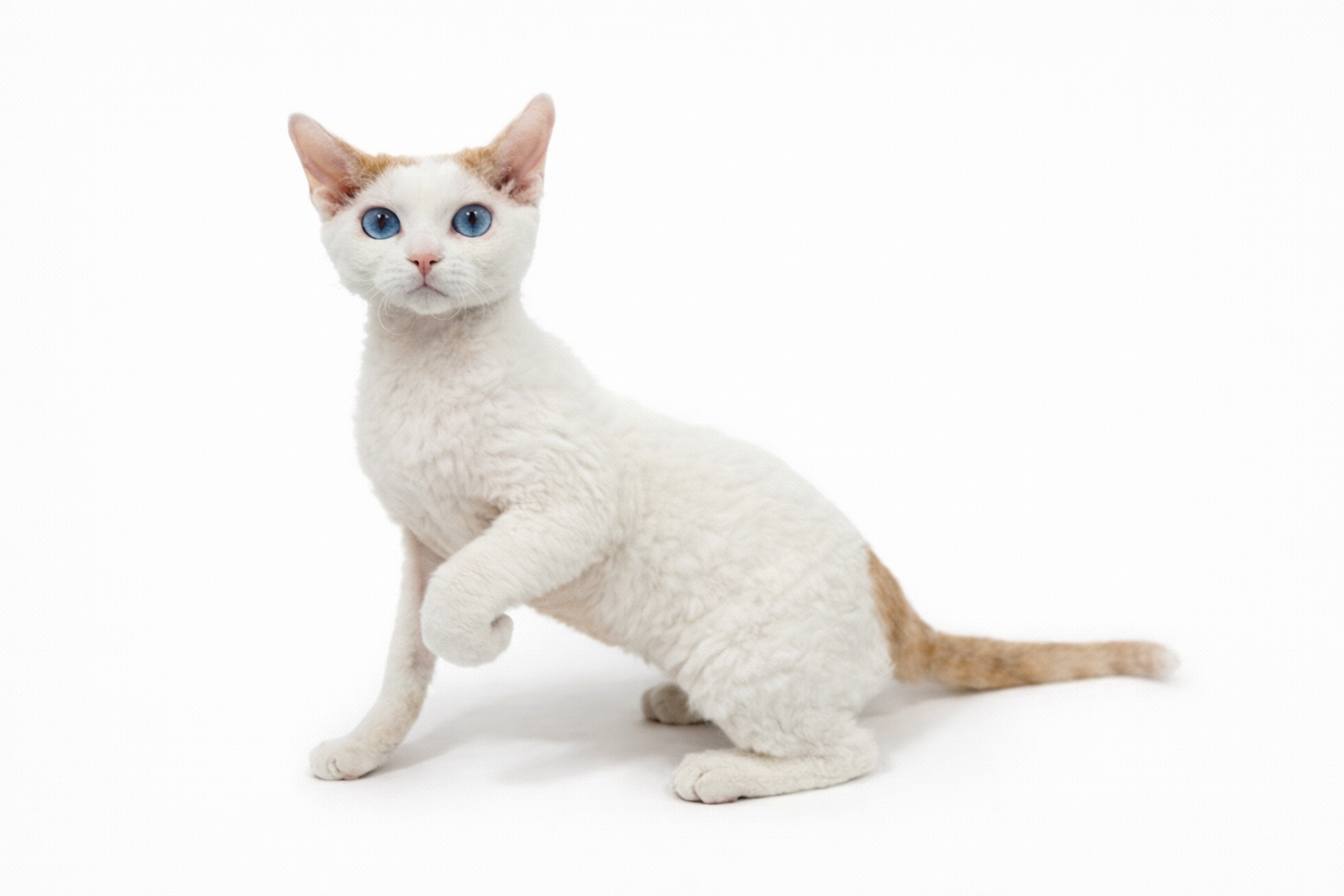
Adamo
DEVON REX · DBE
A slow-maturing male from Latvia, with a confident character and a gentle presence, Adamo stands out for his dominant blue eyes — a rare and luminous expression that enhances both his gaze and his natural elegance in the Devon Rex.
Adamo has normal bilateral hearing on the BAER test, OFA certified.
A Responsibility, Not a Trend
The DBE is beautiful, but health always comes before eye colour.
Current knowledge indicates that particular vigilance is required when a kitten inherits two variants associated with the DBE. Our program therefore applies a conservative principle:
- We do not intentionally breed a cat from a DBE line with another cat from a DBE line.
- The selected partner comes from a line with no known DBE, and its pedigree is taken into consideration in addition to its appearance.
Our DBE breeding cats undergo a BAER hearing test, which objectively evaluates hearing in each ear. Available genetic analyses are also used to screen for known DBE variants, while recognizing that certain historical lines are not yet characterized and therefore cannot be ruled out by a simple DNA panel.
Our Commitment
DBE genetics is a field that is still evolving. As scientific knowledge advances, our breeding practices evolve along with it.
Our approach rests on genetic analyses, BAER hearing tests, pedigree traceability, careful selection of pairings, and the monitoring of our lines over time.
We believe that such an exceptional trait should only be preserved with knowledge, caution and transparency. The health, temperament and wellbeing of our cats will always take priority over rarity or appearance.